Colour Analysis Over 40: How to Find Your Season and Actually Wear It
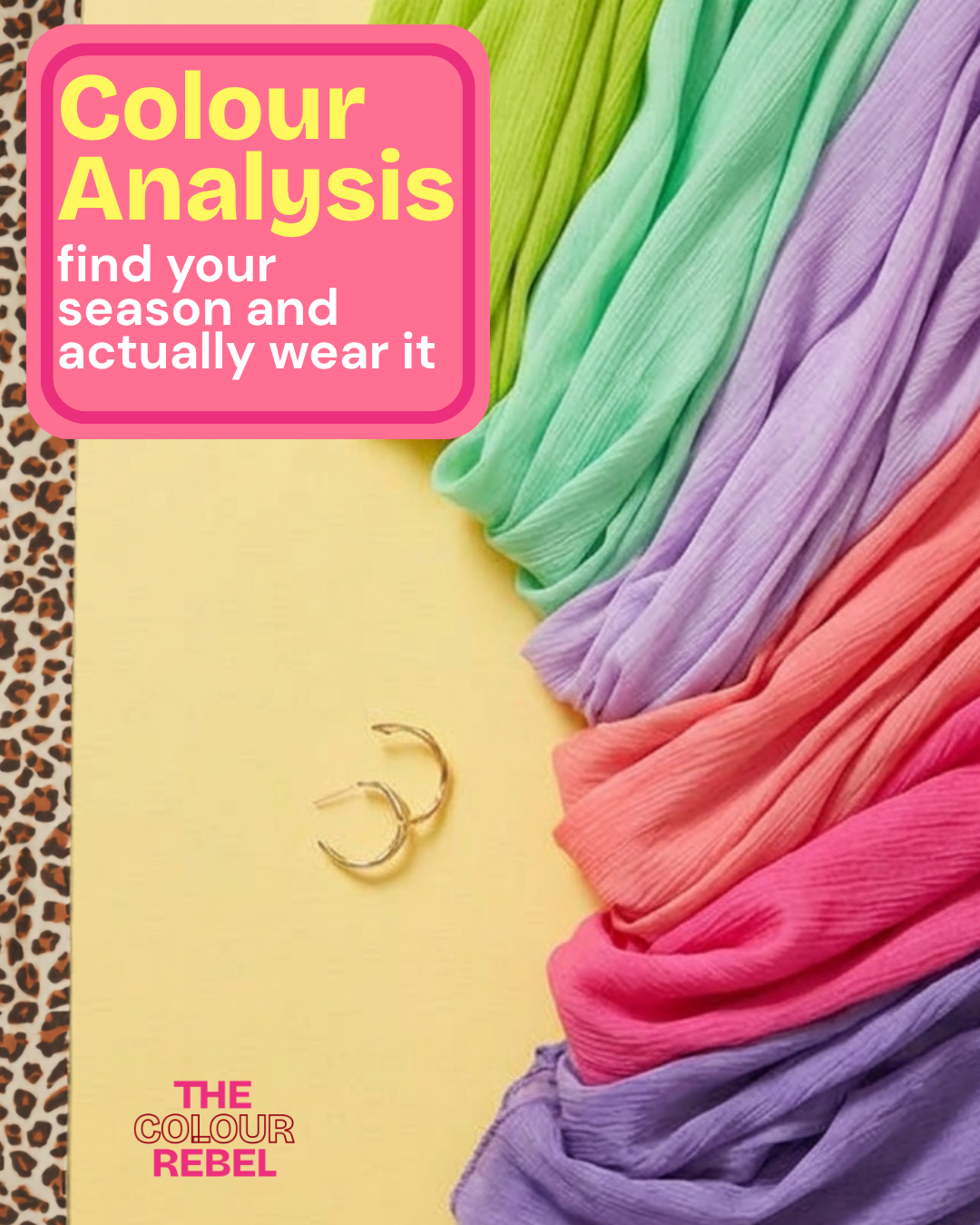
You own colours. Right now they are in a carrier bag at the back of the wardrobe, because three years ago a blue jumper made you look like death and you decided, on the spot, that colour was no longer "you".
It is you. It was always you. What changed is not your nerve. It is your colouring, and nobody handed you the updated rulebook when your hair started doing its own thing.
That rulebook is colour analysis, and this is the version nobody gatekeeps. By the end of this you will know what colour analysis actually is, how to test your own season at the kitchen window, and why the jumper that betrayed you was never the real problem.
Quick version of why I get to say all this. I am a qualified colour analyst from the London College of Style, and I have colour-analysed and styled hundreds of women, from mums hiding in black leggings to women rebuilding themselves after divorce, redundancy, burnout and grief. Before all this I spent twenty years in senior corporate finance and strategy, so I bring creativity and brutal practicality in equal measure. I can tell you why the orange works and build the spreadsheet to prove it.
I also used to be the one hiding in black. So none of this is theory.
What colour analysis actually is, and what TikTok got wrong
Colour analysis is working out which colours light up your face and which ones mug you in broad daylight. The right ones make your skin look even, awake and like you slept. The wrong ones hand you shadows, sallow patches and the urge to buy more concealer.
The internet turned it into a personality quiz with a filter slapped over it. It is not that. Underneath the trend is a real, decades-old system, and it runs on three honest questions: is your colouring warm or cool, light or deep, soft or clear. Strip away the ring lights and you are left with something genuinely useful, which is more than I can say for most of what gets sold to women over 40.
Why your colours turned on you after 40
In your twenties you could wear a bin bag and a hangover and still look fine, because your colouring was high contrast and your skin did all the work. After 40 the margins tighten. Hair softens or greys, skin loses a little of its flush, and the colours that needed all that contrast suddenly have nothing to push against.
So your old favourites betray you. It is not that you "let yourself go". It is that your colouring moved house and your wardrobe never got the forwarding address.
And while we are here. Black is not sophisticated by default. On a lot of women over 40 it drains the face, deepens every shadow and swaps personality for "safe". Sometimes black is elegant. Sometimes it is just fear in cardigan form. Black is not a personality, and you are allowed to own more than one colour.
The four seasons, minus the gatekeeping
Most colour season analysis sorts people into four families, then into softer sub-groups inside them.
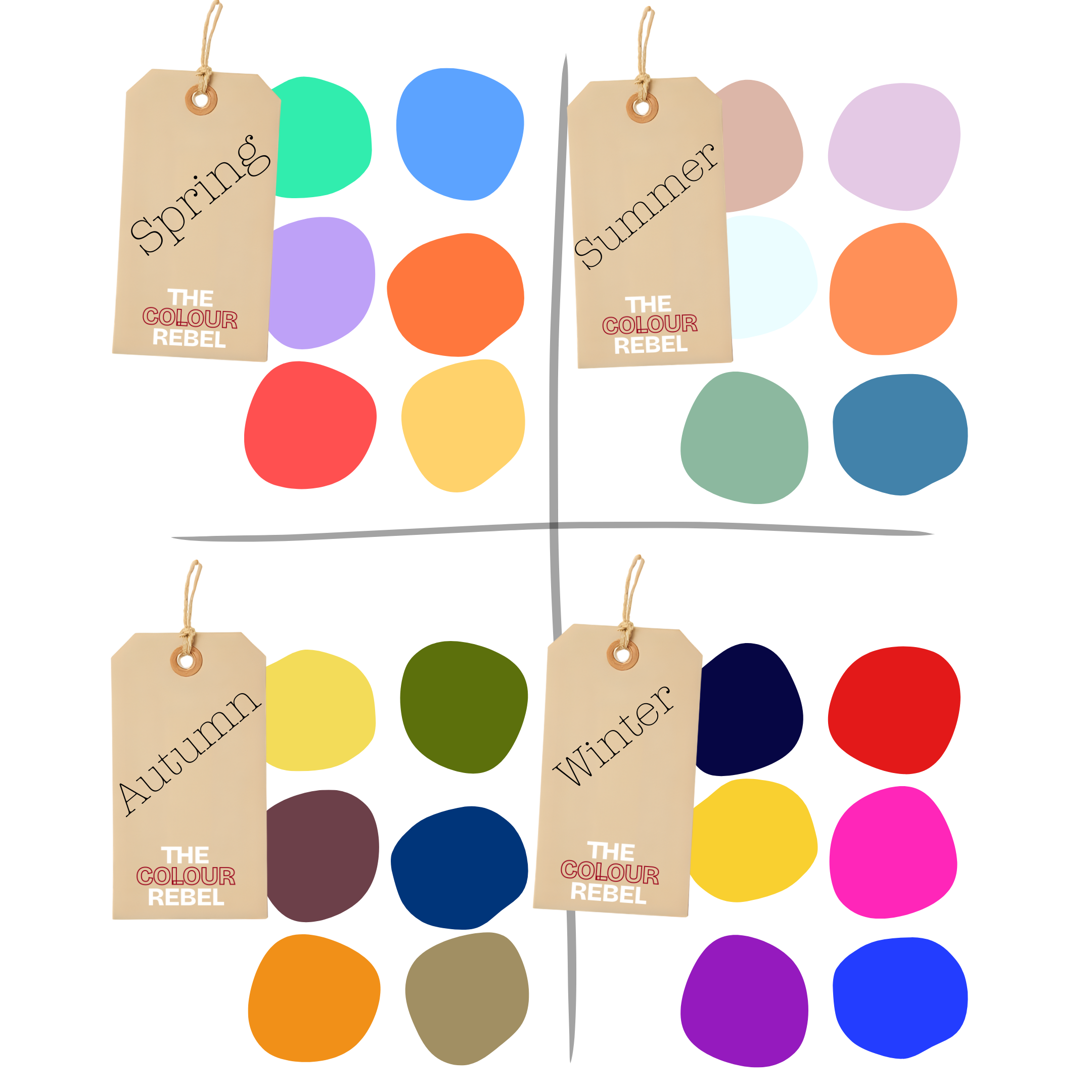
Spring is warm and light. Coral, warm green, gold.
Summer is cool and soft. Dusty rose, soft blue, grey-lavender.
Autumn is warm and deep. Rust, olive, terracotta, mustard.
Winter is cool and clear. True red, charcoal, icy pink, a white so crisp it squeaks.
The ones that trip everybody up are the in-between types, soft autumn and soft summer especially, where the colouring is gentle and low contrast. A lot of midlife women land here as their natural contrast drops, which is the exact reason a colour analysis chart you screenshotted five years ago is now lying to you.
How to test your colour season at the kitchen window
You can get a rough read yourself before you spend a penny. Treat this as a colour analysis test, done in daylight, never under a yellow bulb, makeup off, hair back.
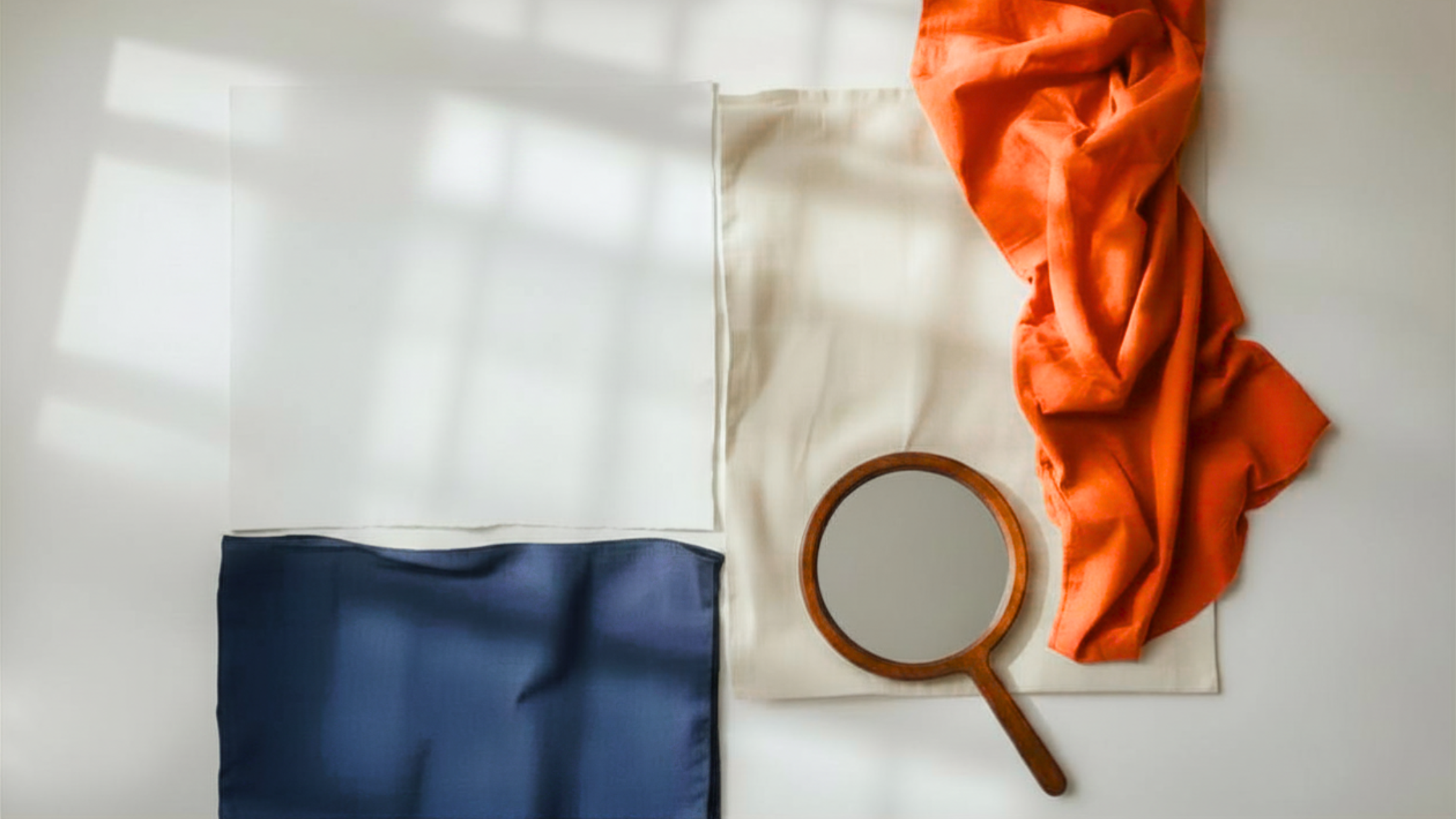
Hold a piece of pure white fabric to your face, then a piece of cream. One makes you look fresh. The other makes you look like you need a lie down. White wins, you lean cool. Cream wins, you lean warm.
Now drape a cool colour like true blue, then a warm one like orange-red. Watch your face, not the fabric. The right temperature lifts your skin and softens the lines around your eyes. The wrong one drops a decade of tiredness onto you in a second.
Then check your contrast. Photograph yourself in black and white. Big difference between hair, skin and brows means clear and deep. Gentle, blended difference means soft and light.
This gets you to the right postcode. It does not get you to the front door, and I am not going to pretend it does.
Personal colour analysis vs guessing in the bathroom mirror
Here is where doing it yourself runs out of road. Home lighting lies, your eyes adjust and trick you, and almost nobody can judge their own contrast honestly, especially with greying hair, which behaves nothing like the colour you remember. The gap between soft summer and soft autumn is tiny on paper and enormous in your wardrobe, and it is a brutal call to make on yourself over the bathroom sink.
A proper personal colour analysis takes the guesswork out. You get your season, your sub-type and the exact shades that do the work, not a vague mood board you have to interpret while holding a top up in Marks and Spencer wondering if it is "your" green.
How to actually wear your colours, which is the bit nobody teaches
Knowing your season is half of it. Wearing it is the half the quizzes never reach.
Put your best colours where they touch your face. Tops, scarves, earrings, the open collar. That is the real estate that lifts your skin and takes years off you for free.
Send your trickier colours south. Your difficult blue still has a job, just not next to your jaw.
Then build a small capsule around two or three hero shades so everything mixes, and add one colour you would never normally dare. The entire point of finding your colours is to wear more of them, not to shrink into a tasteful little box of greige. If you love leopard print, the answer is almost never less leopard print. You are allowed to be the brightest thing in the room.
What this is actually about
Here is the truth underneath all the swatches. Most women do not need a new wardrobe. They need permission. Permission to stop dressing not to be judged, because dressing not to be judged is the actual problem.
You do not need a new body. You need a new level of audacity. Confidence does not arrive after the weight comes off. If you keep waiting until you are thinner to become yourself, you will hand away years you do not get back.
I have watched a woman wear hot pink lipstick for the first time at 47. I have had clients cry because they finally recognised the person in the mirror. My favourite messages are the mirror selfies that just say "I wore the bloody trousers". That is what colour analysis is really for. The colours are just the door in.
Get your colours done properly
If you are done guessing, the Online Colour Analysis Package does it for you for £127. You send your photos, I send back your season, your sub-type and your exact palette, the shades to buy and the ones to walk past, so the next time you shop you already know. No ring light, no filter, no twenty-something insisting you are a "bright spring" when you are a soft autumn who has earned the right to look incredible.
Wear the bloody colour. It has been waiting for you.